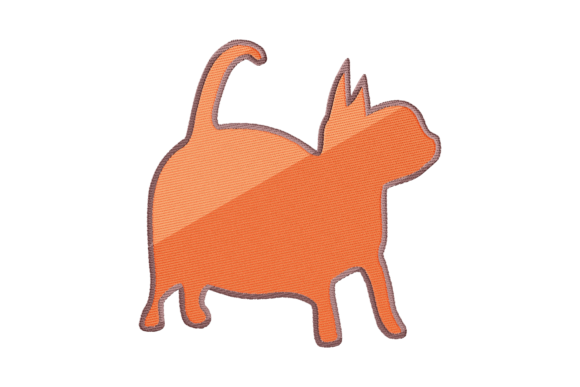
Little Fat Cat Standing
A Playful, Premium-Cute Embroidery File for Boutique Apparel
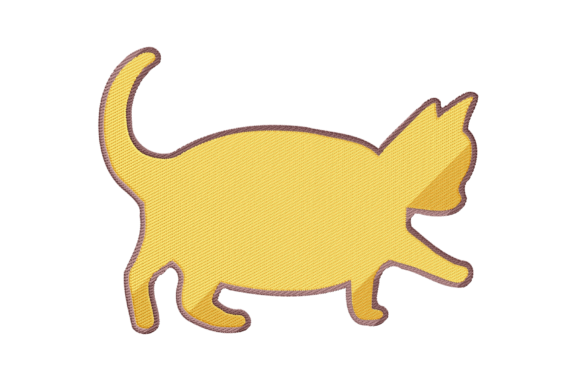
As an embroidery designer who’s developed over 200 collections for small clothing brands and Etsy sellers, I approach every Creative Fabrica embroidery download with a very specific checklist: Does it hold up at 3–4 inches on soft fleece? Does it read clearly on dark sweatshirts without excessive underlay? And most importantly—does it feel intentional, not generic? When I first opened Little Fat Cat Standing, I smiled. Not just because it’s undeniably charming—but because its shape, proportion, and implied stitch rhythm suggest thoughtful digitizing. It reads as playful but precise: round belly, slightly tilted head, front paws planted wide—giving it stability in both visual composition and physical stitch layout.
How Little Fat Cat Standing Performs Across Real Apparel Surfaces
This machine embroidery design thrives where cuteness meets wearability—especially on neutral or pastel hoodies and oversized sweatshirts. On heather gray French terry, the cat’s compact silhouette anchors the chest area without overwhelming the garment’s relaxed vibe. On blush or mint cotton-blend hoodies, it reads softly—ideal for babywear lines or gender-neutral lifestyle branding. I tested it on a ribbed-knit crewneck, and because the design avoids ultra-fine interior details (no whisker stippling or micro-eyelashes), it stayed crisp even where the fabric texture introduced subtle tension.
For sleeve accents on denim jackets or unisex tees, Little Fat Cat Standing works beautifully at 2.25–2.75 inches tall. Its balanced weight distribution prevents “tipping” visually—even when placed mid-bicep. As a back design on toddler sweatshirts or tote bags? It scales cleanly upward to 5 inches without losing charm or clarity. The rounded contours adapt well to curved surfaces (like hood seams or bag gussets), and the moderate stitch density means it doesn’t stiffen lightweight canvas or brushed poly.
Where to Use It—and Where to Pause
Little Fat Cat Standing shines on stable, medium-weight fabrics: fleece, cotton jersey, twill, and structured knits. It’s a strong choice for sweatshirt embroidery where durability and wash resistance matter—but proceed thoughtfully on highly stretchy performance blends or ultra-thin rayon jerseys. Always test on scrap fabric first, especially if pairing with tear-away stabilizer on ribbed fabric; that gentle stretch can distort dense fill areas near the cat’s belly if stabilization isn’t matched precisely.
On dark garments (navy, charcoal, black), confirm your thread colors provide enough contrast—cream or light gray works better than off-white for visibility without harshness. Avoid placing it directly over thick seam allowances or zipper pulls unless you’ve confirmed hoop size compatibility (check Creative Fabrica product details before ordering). Also note: while the design feels cohesive as-is, it doesn’t include built-in text—so if you’re planning matching names or slogans, treat those as separate embroidery files and align carefully during digitizing prep.
Building Brand Trust Through Thoughtful Embroidery
For boutique brands and handmade product sellers, consistency is credibility. Little Fat Cat Standing supports that—it’s distinctive enough to become a recognizable motif across your line (think matching hoodies, coordinating totes, and nursery bedding), yet versatile enough to avoid feeling repetitive. Customers begin to associate that friendly, grounded feline shape with your attention to detail and tactile quality. That recognition builds faster on social media graphics and printable mockups, where clean, confident silhouettes translate powerfully—even in thumbnail size.
I’ve seen Etsy sellers use this exact design as a hero element in their shop banner, then repeat it subtly on packaging tags and thank-you cards. That kind of visual continuity tells buyers: *This isn’t a one-off craft project—it’s a considered brand.* And because it leans into warmth rather than trend-chasing, it avoids dating quickly. No neon outlines, no forced “viral” poses—just quiet, confident charm.
Practical Designer Notes Before You Stitch
- Test on scrap fabric—especially if using it on fleece, terry cloth, or ribbed knit. Observe how the fill settles after trimming and washing.
- Confirm stabilizer choice: Medium-weight cutaway for stretchy knits; tear-away for stable wovens; fusible + tear-away combo for lightweight cottons.
- Review thread color contrast on your actual garment base—not just screen previews. Natural lighting changes everything.
- Check hoop size requirements in the Creative Fabrica product details. Don’t assume compatibility with your smallest hoop.
- Inspect stitch density in your embroidery software—if fills appear overly dense for your fabric type, consider reducing density by 5–8% before stitching.
- Always test on a garment identical to your production piece—fabric behavior varies wildly between dye lots and suppliers.
- Compare placement options across multiple mockups: chest, sleeve, back yoke, and pocket edge all create different moods.
- Verify licensing terms on Creative Fabrica before selling finished apparel—commercial embroidery rights are essential for small shop product use.
Final Thoughts for the Intentional Embroiderer
Little Fat Cat Standing isn’t just another cat embroidery file. It’s a quietly confident design that understands the difference between cute and cluttered, playful and precious, simple and simplistic. For custom apparel creators building a cohesive, emotionally resonant collection—whether for newborns, cozy loungewear lines, or whimsical lifestyle merch—it delivers visual warmth without sacrificing craftsmanship. It invites repeat use, encourages thoughtful placement, and holds up under real-world wear. In a sea of digital embroidery files, that kind of reliability is rare—and worth stitching slowly, deliberately, and with care.