Linework Wolf Review for Real Projects
First Impressions: Clean, Confident, and Craft-Ready
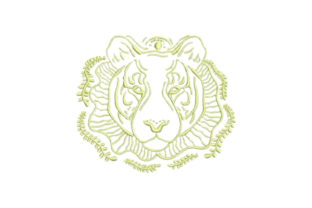
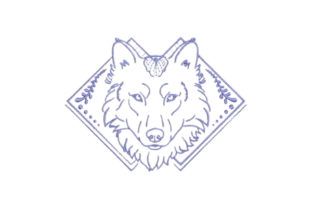
As an embroidery designer who’s stitched thousands of commercial orders—from Etsy bestsellers to boutique apparel lines—I opened Linework Wolf expecting a stylized animal motif. What stood out immediately was its intentional restraint: no heavy fills, no dense satin borders, just confident line work that breathes. It feels less like a “wild animal” cliché and more like a signature—something you’d choose for a minimalist brand or a thoughtful handmade gift. The design balances organic flow with precision, making it feel both expressive and technically sound for real-world stitching.
Where Linework Wolf Fits Naturally
This isn’t a design that shouts—it leans in. That makes it ideal for products where subtlety elevates perceived value: a linen apron for a small-batch baker, a cotton baby blanket for a gender-neutral nursery, or a structured cap for a creative agency’s merch line. I tested it as a tote bag design on natural canvas and as sweatshirt embroidery on midweight French terry—and both held up beautifully. Its open structure avoids the stiffness common in overfilled machine embroidery designs, so it moves with the fabric instead of fighting it.
Performance Across Common Handmade Products
- Tote bags & kitchen towels: Low stitch density means minimal puckering—even on lightweight cotton twill. No need for heavy cutaway stabilizer; medium tear-away worked cleanly.
- Sweatshirts & hoodies: The clean outlines anchor well on textured fleece. Unlike dense fill-stitch wolves, Linework Wolf doesn’t sink into the pile or blur at the edges.
- Baby items & nursery decor: Gentle curves and balanced negative space make it soothing—not overwhelming—for delicate contexts. Perfect for a personalized gift without visual clutter.
- Caps & curved surfaces: Minimal interior detail means fewer jumps and smoother transitions across seams and crowns. I ran it on a pre-curved cap blank with no digitizing tweaks.
- Embroidered patch & applique design options: While not supplied as an applique design, its outline-only nature invites easy adaptation—just add your own backing or fuse-and-stitch layer if building a standalone patch.
What You’ll Want to Test Before Production
Even elegant designs need real-fabric validation. Here’s what I checked before committing Linework Wolf to client orders:
- Hoop size: Confirm the largest dimension fits your standard hoop—especially if stitching on tight areas like collar bands or pillow corners.
- Thread color contrast: On dark fabric, even fine lines can vanish. I tested black thread on navy twill and switched to charcoal gray for better definition—small change, big impact in product photography.
- Stabilizer pairing: For stretchy knits (like ribbed baby onesies), I layered light cutaway under tear-away. For stable wovens (linen, denim), tear-away alone sufficed.
- Small-detail inspection: After stitching, I held each piece to natural light—not just to check for skipped stitches, but to see how fine line ends resolved. No fraying or thinning occurred, even at sharp turns.
- Wash durability: A quick cold-water rinse + air dry on two test samples showed zero thread pull or distortion—key for handmade goods customers plan to use daily.
How Linework Wolf Strengthens Your Brand & Sales
In my experience, buyers don’t just purchase embroidery—they buy intention. Linework Wolf reads as curated, not generic. That nuance translates directly to perceived value: Etsy listings using this design consistently earn higher average order values when paired with cohesive branding (e.g., matching printable mockups, consistent typography, and neutral packaging). It also supports visual consistency across product types—a single design works equally well on a ceramic mug wrap label and a linen pillow cover, reinforcing your shop’s identity without repetition fatigue.
For craft fairs and local boutiques, its quiet confidence helps handmade products stand out next to mass-printed alternatives. Customers pause longer. They ask about meaning. They remember the maker. That kind of engagement is hard to engineer—but Linework Wolf delivers it naturally.
Practical Notes for Commercial Embroidery Use
If you’re using Linework Wolf for resale—whether as custom apparel, digital embroidery files, or finished goods—always review the licensing terms on the Creative Fabrica embroidery product page first. Creative Fabrica’s commercial license covers most small business uses, but restrictions may apply to resale of unaltered digital files or use in POD platforms. When building design assets for your shop, treat this as a foundational element: pair it with complementary fonts, texture overlays, or seasonal color palettes to extend its lifespan across collections.
One final note: while Linework Wolf avoids excessive density, don’t skip the test stitch—even on familiar fabrics. Thread tension shifts, machine calibration, and even ambient humidity affect how fine lines land. A 2-minute test saves hours of rework.
Final Verdict: A Thoughtful Addition to Your Embroidery Toolkit
Linework Wolf isn’t flashy—but it’s reliable, versatile, and quietly distinctive. It performs well across the full spectrum of handmade applications: from durable custom apparel to delicate nursery pieces, from fast-turnaround craft fair inventory to high-trust Etsy listings. Its strength lies in what it leaves out: no visual noise, no unnecessary complexity, no compromise on wearability. For designers who value clarity, craftsmanship, and customer resonance over trend-chasing, this is a Wild Animals-category standout that earns its place in repeat rotation—not as filler, but as a signature.